Table of Content
Simple, Strong, and Smart: Why Pneumatic Cylinders Lead in Industrial Applications
1. What Makes Pneumatic Cylinders So Useful?
- 1.1 Fast and Accurate Movement
- 1.2 Cost Effective
- 1.3 Safe and Reliable
- 1.4 Can Be Used in Many Ways
- 1.5 Easy to Install and Maintain
- 1.6 Uses Less Energy
- 1.7 Clean and Safe for Sensitive Environments
2. Where Are Pneumatic Cylinders Used?
- 2.1 Industrial Manufacturing
- 2.2 Automotive Industry
- 2.3 Robotics and Automation
- 2.4 Aerospace and Defense
3. Finding the Right Pneumatic Cylinder
- Compact Cylinders
- Rotary Cylinders
- Rodless Cylinders
- NFPA Interchangeable Cylinders
- Custom Cylinders
4. Conclusion: A Smart Choice for Automation
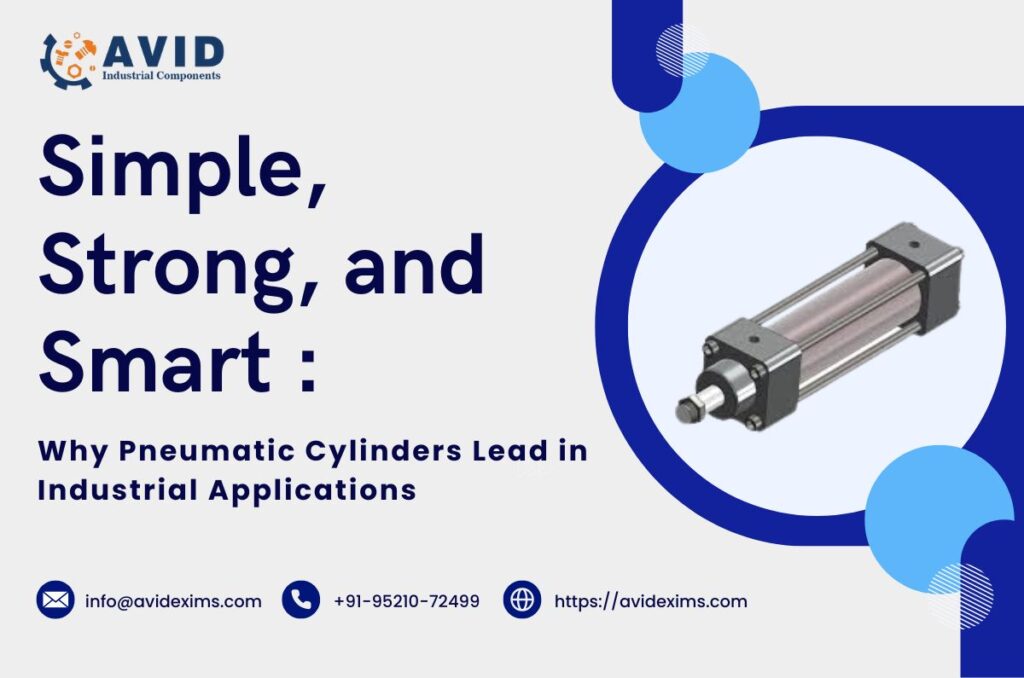
Simple, Strong, and Smart: Why Pneumatic Cylinders Lead in Industrial Applications
In factories and automated systems, it’s very important to make sure things run smoothly, quickly, and safely. One tool that helps make this happen is the pneumatic cylinder. Also called air cylinders, these devices use compressed air (high-pressure air) to create straight-line (back-and-forth) motion. They are commonly used in machines for moving, lifting, pushing, or pulling parts in a wide variety of industries.
What Makes Pneumatic Cylinders So Useful?
1. Fast and Accurate Movement
Pneumatic cylinders can move very quickly and with great control. This makes them ideal for tasks that require quick, repeated motion — like moving items on a conveyor belt, operating robotic arms, or packaging products.
Because they can be controlled precisely, they help improve how fast and how accurately work is done. This leads to more products being made in less time, with fewer mistakes.
2. Cost Effective
One of the biggest advantages of pneumatic cylinders is that they’re affordable to install and run. Most factories already have a system for compressed air, so it’s easy to connect cylinders to it. Also, these systems are simpler than other types of equipment (like hydraulic or electric systems), which makes them easier and cheaper to maintain.
You don’t need expensive tools or complicated setups to get them working, which helps save money over time.
3. Safe and Reliable
Safety is always important, especially when working with machines. Pneumatic systems are generally safer than electric or hydraulic systems:
- No risk of electric shock
- No leaks of oil or other harmful fluids
- Won’t overheat easily
They also tend to last a long time and don’t break down often, so machines can keep working without many interruptions.
4. Can Be Used in Many Ways
Pneumatic cylinders come in many shapes, sizes, and types. No matter what kind of job you need them for, there’s likely a type of cylinder that will work:
- Compact cylinders for small spaces
- Rotary cylinders for turning or spinning actions
- Rodless cylinders for saving space (no rod sticking out)
- NFPA cylinders that match industry standards (easy to replace)
- Custom-made cylinders for special tasks
This flexibility makes them useful in everything from car factories to food packaging plants.
5. Easy to Install and Maintain
Adding pneumatic cylinders to a machine is usually simple. Their design is straightforward, and they often follow industry-standard sizes and connections. This makes installation faster and reduces the need for special parts.
They’re also easy to maintain — if something goes wrong, it’s usually quick and cheap to fix.
6. Uses Less Energy
Pneumatic systems only use air when they are working. This means they don’t waste energy when they’re not in use. Plus, modern air systems are designed to use less air overall, which helps reduce energy bills.
This is a big advantage for companies looking to be more energy-efficient and environmentally friendly.
7. Clean and Safe for Sensitive Environments
In places like food factories or pharmaceutical plants, cleanliness is extremely important. Since pneumatic cylinders use only air, there’s no risk of oil spills or fluid leaks, unlike hydraulic systems.
This makes them perfect for industries where keeping things clean and free from contamination is critical.
Where Are Pneumatic Cylinders Used?
Pneumatic cylinders are found in many industries. Here are some key examples:
1. Industrial Manufacturing
In factories, pneumatic cylinders are used for:
- Material handling (moving parts or products)
- Positioning and aligning objects
- Clamping, lifting, or pressing in production lines
For example, they might push a product into place on an assembly line or lift an item onto a conveyor belt. Their speed and repeatability make them perfect for high-volume, repetitive tasks.
Pneumatic cylinders are also used in:
- Packaging machines
- Conveyor systems
- Pick-and-place machines
Using air cylinders helps manufacturers reduce labor, boost quality, and automate repetitive tasks without needing complex or expensive systems.
2. Automotive Industry
The automotive sector uses pneumatic cylinders both in manufacturing plants and inside vehicles. Common uses include:
- Automating welding, painting, and assembly
- Operating pneumatic tools (like impact wrenches or air ratchets)
- Controlling doors, brakes, or suspension systems
In production, air cylinders help increase speed and quality, while in vehicles, they provide smooth, reliable motion for key components.
3. Robotics and Automation
In robotics, pneumatic cylinders provide the movement needed for robotic arms and grippers. They’re often used for:
- Pick-and-place operations
- Welding or painting
- Assembly tasks
Because they are lightweight, affordable, and fast, pneumatic cylinders are great for automating repetitive actions in many robotic applications — from factories to warehouses.
4. Aerospace and Defense
In aerospace, pneumatic cylinders are used in critical systems such as:
- Landing gear and cargo doors
- Flight control surfaces
- Missile and turret systems
They are chosen for these applications because they are:
- Lightweight
- Durable
- Able to withstand extreme conditions (temperature, pressure, etc.)
In military systems, their speed and reliability make them essential for everything from surveillance equipment to unmanned aerial vehicles (UAVs).
Finding the Right Pneumatic Cylinder
Because there are so many types available, it’s important to choose the right one for your specific needs. Some examples include:
- Compact cylinders – great for machines with tight space
- Rotary cylinders – useful when you need a twisting motion
- Rodless cylinders – good when you want to save space and don’t need a rod sticking out
- NFPA interchangeable cylinders – follow standard sizes, so they’re easy to replace or upgrade
- Custom cylinders – can be designed for very specific or unusual jobs
Conclusion: A Smart Choice for Automation
Pneumatic cylinders are one of the most reliable and cost-effective tools in industrial automation. They help machines move quickly and accurately, are safe to use, work in clean environments, and are easy to install and maintain.Whether you’re building new machinery or upgrading old systems, pneumatic cylinders offer a smart, flexible solution that can help improve performance, save money, and keep operations running smoothly.